Having varicose veins isn't just a cosmetic issue. Many people complain of aching pain, heaviness in the legs, swelling, burning sensations, and discomfort. Varicose veins can worsen slowly and cause more serious problems if left untreated.
Over the past few years, varicose vein treatment has advanced significantly. Laser-based surgeries have replaced traditional surgeries that required stitches, cuts, and long recovery periods with safer, faster, and less invasive procedures.
The benefits of non-surgical laser treatments include reduced pain and faster recovery, which is why many patients are choosing them.
-
What Are Varicose Veins?
Varicose veins are enlarged, twisted veins in the legs and feet. The valves inside the veins become weak or damaged, allowing blood to pool rather than flow back to the heart.
Here are some common symptoms:
• Blue or purple veins that bulge
• Pain or heaviness in your legs
• Swelling in your legs or ankles
• Feelings of burning or throbbing
• Leg cramps at night
• Itching around the veins
• Fatigue after standing for long periods
Standing for long hours, being overweight, and living a sedentary lifestyle are all risk factors for varicose veins.
-
Why Traditional Surgery Is No Longer the First Choice
In the past, vein stripping surgery was often used for severe varicose veins. In this procedure, damaged veins are removed through incisions. In most cases, recovery took several weeks, and there was often pain, bruising, and scarring.
In modern vascular treatments, we use minimally invasive techniques that don't require major surgery.
Endovenous Laser Treatment (EVLT) is a popular and effective treatment today.
-
What Is Endovenous Laser Treatment (EVLT)?
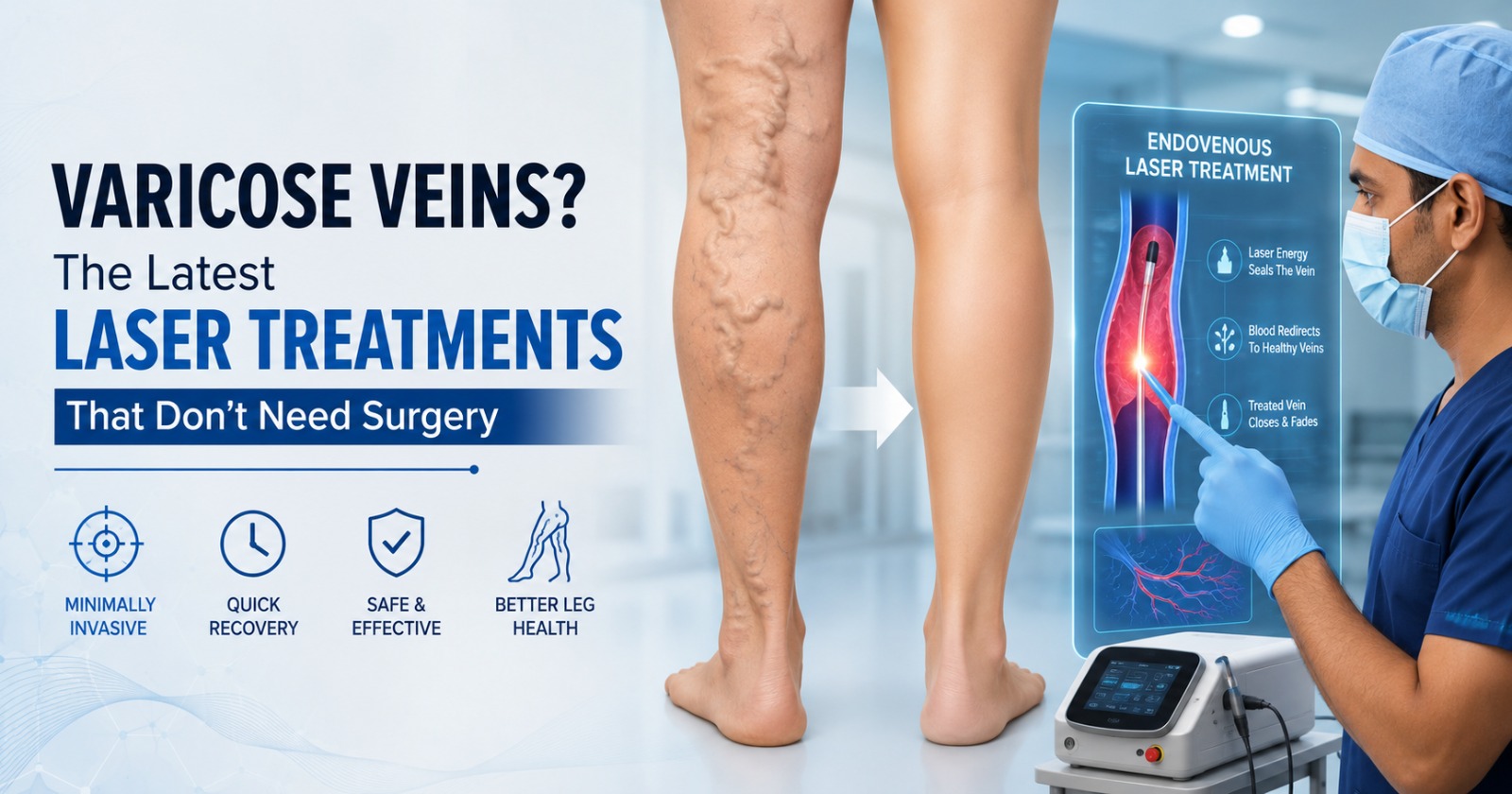
Varicose veins can be treated with EVLT, a laser procedure that doesn't require surgery to remove.
During the procedure:
• Through a tiny hole, a laser fiber is inserted into the vein.
• The laser delivers energy directly to the veins.
• The vein closes and seals shut safely.
• The blood automatically reroutes through healthy veins.
The treated vein shrinks over time and is naturally absorbed.
Typically, the procedure takes less than an hour and is performed under local anesthesia so that the patient can go home right afterward.
-
Benefits of Modern Laser Treatment
Minimally Invasive Procedure
Laser treatment doesn't require big cuts or stitches. The entry point is tiny, so scarring is minimal.
Faster Recovery
After the procedure, most patients can walk right away and resume routine activities.
Less Pain and Discomfort
Compared with traditional surgery, EVLT causes much less pain.
Excellent Success Rates
Lasers can close damaged veins and reduce symptoms with high success rates.
Better Cosmetic Results
Patients often get smoother cosmetic results and fewer scars since there's no major incision.
-
Other Advanced Non-Surgical Treatments
Doctors may also recommend other minimally invasive procedures depending on the veins.
Radiofrequency Ablation (RFA)
By using radiofrequency energy, RFA closes abnormal veins. There's minimal discomfort and quick recovery.
Foam Sclerotherapy
In this treatment, a special foam solution is injected into smaller varicose or spider veins. As the foam collapses, the veins gradually disappear.
Venaseal Glue Therapy
A newer treatment option uses a medical adhesive to seal damaged veins without heat or multiple injections. It is effective for selected patients and usually requires minimal downtime.
-
Who Should Consider Laser Treatment?
People with these symptoms may benefit from laser treatment:
• Painful or swollen veins
• Leg heaviness or fatigue
• Skin discoloration near the ankles
• Visible enlarged veins
• Night cramps or burning sensations
• Venous ulcers or non-healing wounds
A venous Doppler ultrasound scan evaluates blood flow and identifies the affected veins before treatment.
-
Recovery After Laser Treatment
EVLT usually has a smooth and easy recovery.
Generally, patients should:
• Walk regularly after the procedure
• Wear compression stockings temporarily
• Avoid prolonged standing initially
• Stay physically active to improve circulation
The majority of people can return to work and their daily lives quickly.
-
Why Early Treatment Matters
Varicose veins are often ignored because people think they're just cosmetic. Untreated vein disease can lead to complications like:
• Chronic leg swelling
• Skin pigmentation
• Venous ulcers
• Bleeding veins
• Blood clots
• Persistent pain and discomfort
Treatment and early diagnosis can help prevent complications and improve quality of life.
In the past few years, laser treatments have transformed how varicose veins are treated. Alternatives to traditional surgery, like EVLT, are safe, effective, and minimally invasive.
People seeking long-term relief from varicose veins prefer laser treatment because it's less painful, has a faster recovery, and has great cosmetic results.
Consult a vascular specialist for the best varicose veins treatment if you have leg pain, swelling, visible veins, or leg heaviness.